

What Temperature Should Your Water Heater Be Set At?
Set your water heater to 120°F. That is the setting the U.S. Consumer Product Safety Commission recommends to prevent tap water scalds, and water heater manufacturer A.O. Smith says household settings are typically no higher than 120°F.
The difference between 120°F and 140°F is bigger than it sounds. The CPSC's tap water scald guidance says a six-second exposure to 140°F water can cause a third-degree burn, while at 120°F the same injury takes about five minutes. Some water heater guides still describe 140°F as a standard setting, which is exactly the temperature the CPSC uses as its warning example. This post covers why 120°F is the usual target, how to check and adjust your setting, and when a temperature problem needs a plumber instead of a dial adjustment.

Why Is 120°F the Recommended Water Heater Setting?
A water heater setting of 120°F balances comfort, safety, and energy use. The CPSC recommends lowering water heaters to 120°F to reduce the risk of scald injuries, and notes the change also conserves energy and saves money.
Scalds are the main reason the number matters, because hot tap water burns much faster as the temperature climbs. The CPSC advises always hand-testing water before use, especially when bathing infants and young children.
A.O. Smith gives the other side of the balance in its maintenance guide: setting the temperature too high creates dangerous, scalding water, and setting it too low can allow bacteria to grow. The goal is a setting that is hot enough without being dangerous, and for most households both sources point to the same number.
How Hot Is Too Hot for a Water Heater?
The CPSC's burn timing is the clearest guide:
140°F water: a third-degree burn in about six seconds
120°F water: a third-degree burn takes about five minutes
That gap is why the CPSC's guidance centers on 120°F rather than 140°F. If you are not sure what your tank is set to, measure it at the tap using the method below.
How Do You Check Your Water Heater's Actual Temperature?
Measuring at the tap tells you what actually reaches your family. The CPSC suggests holding a candy or meat thermometer under the faucet to check the temperature.
Timing matters for an accurate reading. The CPSC recommends testing first thing in the morning or at least two hours after anyone has used hot water, so the tank has had time to reach its full set temperature.
Use the faucet closest to the water heater for the first reading, then check a bathroom faucet on another floor. If the readings are well above 120°F, lower the setting and test again after a few hours. Write down the reading and the dial position each time, so you have a baseline if the temperature starts drifting later.
How Do You Adjust the Temperature on a Water Heater?
The steps depend on whether you have a gas or electric unit. A.O. Smith's guide lays them out:
Electric units: turn off the electricity to the water heater at the breaker first.
Electric units: use a screwdriver to remove the access panel, taking care to avoid wiring and components.
All units: find the thermostat dial, control knob, or display, and adjust it to your household's needs, which A.O. Smith says is typically no higher than 120°F.
Electric units: replace the cover and turn the power back on.
All units: monitor the new temperature and adjust again if needed.
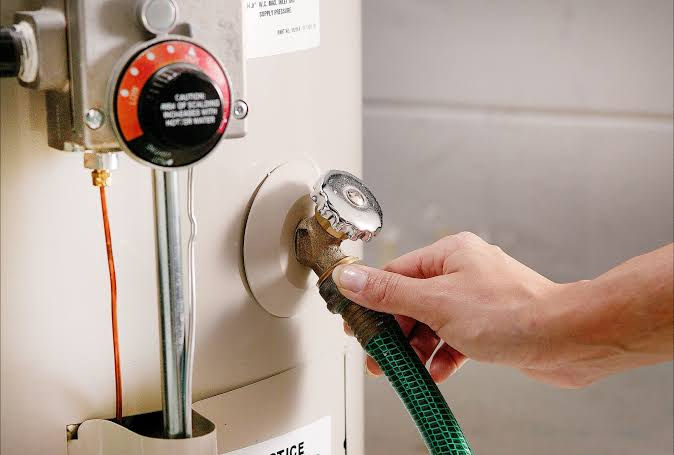
On a gas water heater, the temperature control is usually on the gas control valve near the bottom of the tank, and no panel removal is needed. If you are not comfortable working around gas or electrical components, A.O. Smith recommends calling a professional.
What About Tankless Water Heaters?
Tankless units heat water on demand and typically set temperature through a control panel or display. The same 120°F guidance for scald prevention applies to the water that reaches your faucet. Check your owner's manual for how to change the setting on your model.
Does Lowering the Water Heater Temperature Save Money?
Yes, according to the CPSC, which notes that lowering the setting to 120°F will conserve energy and save money.
A.O. Smith adds another efficiency step: insulating the pipes and the tank reduces heat loss and improves efficiency, and it helps protect pipes from freezing in colder climates. That is worth doing in unheated basements around Bethel Park and the South Hills. A.O. Smith's method is simple: measure the pipes, choose foam sleeves that match their size, start at the tank and work outward, and tape the seams so there are no gaps. Wear gloves and eye protection when working around the unit, as A.O. Smith advises for any water heater maintenance.
If your water never gets hot enough at 120°F, the setting may not be the real problem. Rheem links running out of hot water faster than usual to sediment buildup, and thermostats and heating elements are common repair items on their own. Our guides on when to schedule water heater repair in Pittsburgh and how long a water heater lasts cover what to look for.
When Should You Call a Plumber About Water Temperature?
Call a plumber when the temperature swings, the water will not get hot at any setting, or the relief valve starts discharging water. A.O. Smith calls water that is too hot or too cold one of the most common water heater issues, and one of the easiest to fix by adjusting the thermostat. When an adjustment does not fix it, a component may be failing.
Gas units bring their own warning signs, and any smell of gas near the heater means leaving the house and calling your gas company from outside. If the pilot light keeps going out, read our post on a water heater pilot light that keeps going out. If you are weighing a new unit, our comparison of tank vs tankless water heaters for Pittsburgh homes explains the tradeoffs.
FAQ
What is the best temperature for a water heater?
120°F for most homes. The CPSC recommends it to prevent scalds, and A.O. Smith says household settings are typically no higher than 120°F.
Is 140°F too hot for a water heater?
For most homes, yes. The CPSC says 140°F water can cause a third-degree burn in about six seconds.
Can a water heater be set too low?
Yes. A.O. Smith warns that setting the temperature too low can allow bacteria to grow in the tank.
How do I test my hot water temperature?
Hold a candy or meat thermometer under the faucet, first thing in the morning or at least two hours after hot water use, as the CPSC suggests.
Does turning down the water heater save energy?
The CPSC says lowering the temperature to 120°F conserves energy and saves money.
Why is my hot water still too hot after I turned the dial down?
The tank holds hot water, so it takes time to reach the new setting. Test again after a few hours without hot water use. If it stays too hot, the thermostat may need service.
Water Heater Service From a Local Bethel Park Team
All Pro Plumbing Heating & Cooling services tank and tankless water heaters from all major brands, including thermostats, heating elements, pressure relief valves, and pilot light problems. The company offers repair, replacement, and routine annual maintenance, and it quotes clear pricing and options before work begins. Registered Master Plumber John Oakes founded the business in 2006, and today it runs from its own office on Library Road in Bethel Park with 10 local employees. See water heater repair and replacement and tank and tankless water heater service.
Visit All Pro Plumbing or call 412-595-8204 today. Contact us for more information.



Comments