

Why Is Your Water Heater Leaking?
A water heater usually leaks from one of a few places: a loose pipe connection on top, the temperature and pressure (T&P) relief valve, the drain valve near the bottom, or the tank itself. Water heater manufacturer A.O. Smith lists loose connections, a faulty drain valve, high water pressure, a worn-out anode rod, sediment buildup, hard water corrosion, and old age among the most common causes. Leaks from fittings and valves are often repairable. A leak from the tank body almost always means replacement.
A dripping relief valve is the leak most often misread. A.O. Smith's maintenance guide says T&P valves will drip if water pressure is too high or because of thermal expansion in a closed plumbing system, and it advises controlling the water pressure and installing a thermal expansion tank before replacing a dripping valve. Swapping the valve without fixing the pressure just sets up the next drip. In Allegheny County, there is a second step homeowners often miss: the Allegheny County Health Department requires a plumbing permit for plumbing that is installed or altered, and its permitting page specifically includes replacement cards for water heater installations. This guide covers how to find the leak, what each location usually means, and when repair stops making sense.

What Should You Do First When a Water Heater Leaks?
Limit the damage, then diagnose. A.O. Smith's steps for working on a water heater start the same way every time:
Turn off the power at the breaker for an electric unit, or turn the gas control to "Off" for a gas unit.
Shut off the cold water supply valve to the heater.
If water is spreading, know where your home's main water shutoff is.
Let the water cool before touching anything near the drain valve or relief valve. If the leak is heavy or you cannot stop it, treat it as an emergency. Our guide on how to shut off water in a plumbing emergency walks through finding the main.
Is It Really a Leak or Just Condensation?
Not every puddle is a leak. A.O. Smith notes that condensation forming on a water heater is often mistaken for a leak, so the first diagnostic step is ruling it out.
Dry the tank and the floor, then check again after the heater runs. Moisture on the outside of the tank with no clear source may be condensation. Water that traces back to a fitting, valve, or seam is a leak.
Why Is Water Coming From the Top of the Water Heater?
Leaks at the top usually come from fittings, not the tank. The common sources:
Loose pipe connections: A.O. Smith says connections can loosen over time from thermal expansion and wear, and usually need tightening or replacement.
The T&P relief valve: This safety valve opens to release pressure. A.O. Smith explains that if it does not work correctly, the tank can over-pressurize and explode.
The discharge pipe: Water running out of the pipe connected to the relief valve means the valve is opening, which points back to pressure or temperature.
What Does a Dripping Relief Valve Mean?
A dripping T&P valve is doing its job or telling you something is off with pressure. A.O. Smith recommends lifting the lever to test the valve per its label, inspecting it yourself once a year, and having a professional inspect it every five years. If it drips, have the home's water pressure checked and ask about a thermal expansion tank before replacing the valve.
Why Is Water Coming From the Bottom of the Water Heater?
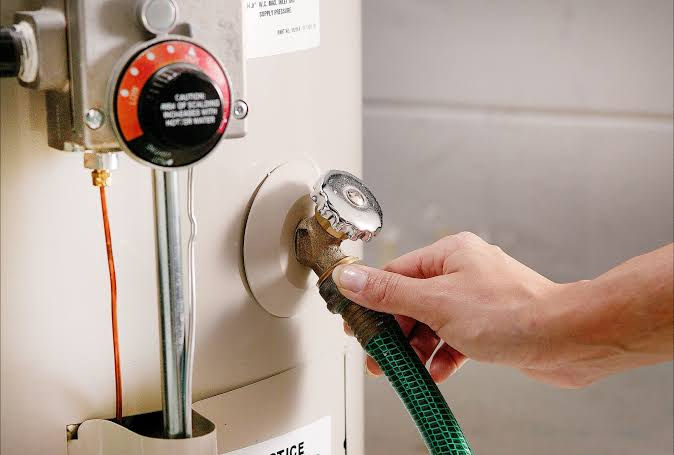
Bottom leaks range from a quick fix to the end of the tank. The drain valve is the easy case: A.O. Smith says a loose or faulty drain valve can usually be fixed by tightening it or replacing the part.
Sediment and corrosion are the hard cases. A.O. Smith explains that minerals in hard water can collect at the bottom of the tank and cause overheating, cracks, and leaks, and that corrosion from hard water cannot be repaired and will eventually require tank replacement. A cracked tank, the company says, typically means a full replacement.
The anode rod plays a role here. It corrodes on purpose to protect the steel tank, and A.O. Smith says these rods usually last three to five years. Once the rod is used up, the tank itself starts to corrode.
Should You Repair or Replace a Leaking Water Heater?
Location and age decide most cases. A.O. Smith says water heaters typically last 8 to 20 years depending on the type, and that for an old unit it is usually more cost-effective to replace than repair.
A simple way to think about it:
Repair is usually reasonable for a loose connection, a worn drain valve, or a relief valve problem traced to pressure.
Replacement is usually the answer when the tank itself leaks, when there is visible corrosion on the tank, or when the unit is near the end of its expected life.
Even a small leak can do real damage over time. A.O. Smith notes that slow leaks can affect floors and walls and create conditions for mold. Our posts on how long a water heater lasts, when to schedule water heater repair in Pittsburgh, and whether to fix or replace a water heater in Bethel Park go deeper on that decision.
Do You Need a Permit to Replace a Water Heater in Allegheny County?
Plumbing work in Allegheny County runs through the Allegheny County Health Department's plumbing program. Its permitting page says residential and commercial plumbing projects require a plumbing permit, that a plumbing plan must be approved before work begins, and that this applies to any plumbing installed or altered, including replacement cards for water heater installations. A final inspection is required on all plumbing permits.
The Health Department also notes that landlords in Allegheny County must hire a Master Plumber for plumbing repairs or modifications in rental units. For more on local rules, see do you need a permit for plumbing work in Pittsburgh. Questions about a specific job can go to the Health Department's plumbing office at 412-578-8036.
FAQ
Is a leaking water heater dangerous?
It can be. A leak can cause water damage, and a relief valve that is not working properly can let the tank over-pressurize. Shut off power or gas and the cold water supply, then call a plumber.
Can a leaking water heater be repaired?
Often, if the leak is at a fitting, drain valve, or relief valve. A.O. Smith says a leak caused by tank corrosion or a crack cannot be repaired and means replacement.
Why is my water heater relief valve dripping?
A.O. Smith says T&P valves drip when water pressure is too high or because of thermal expansion in a closed plumbing system. Fix the pressure issue before replacing the valve.
How long do water heaters last?
A.O. Smith puts the typical range at 8 to 20 years, depending on the type of water heater.
Can I keep using a water heater with a small leak?
A slow leak can still damage floors and walls and encourage mold, according to A.O. Smith. Have it diagnosed promptly rather than waiting.
Does replacing a water heater need a permit in Allegheny County?
Yes. The Allegheny County Health Department's plumbing permit requirement covers installed or altered plumbing, and its permitting page includes replacement cards for water heaters.
Water Heater Repair and Replacement in Bethel Park
All Pro Plumbing Heating & Cooling repairs and replaces tank and tankless water heaters across Bethel Park and the South Hills, working on all major brands and on parts like thermostats, heating elements, pressure relief valves, and pilot lights. Founded in 2006 by Registered Master Plumber John Oakes, the company now works from its own office on Library Road with 10 local employees. You get clear pricing and options before any work begins, and 24/7 emergency service is available for leaks that cannot wait. See water heater repair and replacement and tank and tankless water heater service.
Visit All Pro Plumbing or call 412-595-8204 today. Contact us for more information.




Comments